Wednesday, February 25, 2015

Digital Citizenship

In my personal life digital citizenship holds a great deal of importance to me.
How you act using technology should be no different than how you act in a person to person context. Sometimes a computer can make people braver, more obscure in the way that they act. Sometimes it can do the opposite and give people bravery to say (or well post) the things that they feel or think, that in reality they would never have said.
I, as a student and member of ROTC, use my e-mail all the time. I send and receive e-mails that require the utmost respect from myself and others. They are professional and contain important information that must get out as soon as possible. I also buy my textbooks online, as well as supplies for school and car parts. To me, it is important that the digital world is treated equally to the personal world. I would not want my information, such as credit card number and address, given out in person. So why would i want it on the internet?
Along the lines of privacy, people need to also maintain etiquette while on social media. Personally I have not used social media to hurt anyone else. But I DO however look down on those who do, because yes I have been harmed by negative actions through media. I have been cornered and ridiculed online many times before. I won't go into much details because that is the past and it does not matter. But i will say this:
Be kind online and do not say anything you would not paint on a sign and put in your front yard. When you put something online it is out there for everyone to look at and read. Would you really want to post something that either A:) damages your reputation or B:) could harm you and others around you. The things you do online are now being viewed by employers and could harm your chances of a job if they are not positive postings.
Parents beware of what your children are doing online and keep an eye out for bullying and danger. But do not and i repeat do not hold your children back from thriving on the creativity and knowledge that the internet and media offers your child.
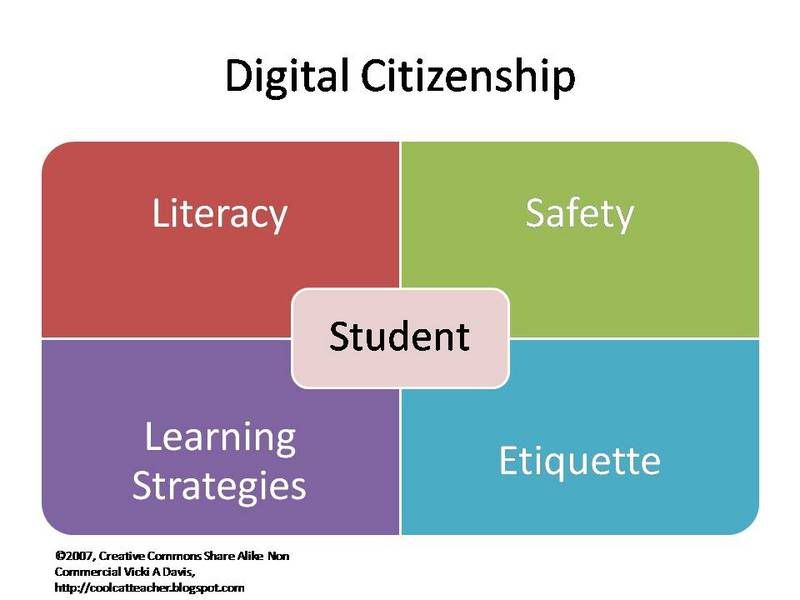
Yes, yes, i understand the internet is a scary place and you only wish to do what is best for what you hold dearest to you. But children need room to grow and transform. Block dangerous sites and add them as friends on all social media sites. Put time locks on the computer to prevent too much time spent on the internet. There are many great things out there that need to be experienced. I happen to find Google, to be my best friend. Through Google i learned:
How to play the piano
Jazz music
how to self diagnose myself ( HELLO webMD)
geography
how to draw
and who hasn't looked up how to kiss when they were younger.
My point is that if, as a parent, you are too over bearing your child will miss out on the great things that the digital world has to offer. They will never learn how to properly act online or grow their skills in the field of technology.

Saturday, February 21, 2015

MP: The blogger's guide to gaining muscle

So for my major project I decided to learn how to build muscle correctly. That means how to work out, what to eat and when, and even the amount of sleep i get a night.
So, in my pursuit to this I started talking to a physical trainer and a nutritionist, who both work at Akron U. As well as my family doctor. Things that  I learned my first week:
1. I need between 6-8 hours of sleep a night. If I can help it, try and make it uninterrupted. Continuous sleep is very helpful to recovery and energy.

2. Do not focus my progress on how much weight I loose. Muscle weighs more. I may go up in weight but that could be because i'm building muscle

3. DRINK LOADS OF WATER. Exercise can dehydrate you and water is very important for the growth of muscles as well as recovery. 

4. Workout different muscle groups on different days and never continuously. This will give your muscles time to recover and breath before your next workout. You will not get exhausted as fast as if you kept repeating a workout. Plus if you mix things up it keeps it fun and interesting for you as you work out!
5. I learned some different workouts as well. 

For my first day February 20. I found a workout online and tried it.. Here is what I did:
Thanks pintrist. Before following this picture I did some stretching and ran a mile before and after my workout. I continuously drank water through the whole workout. 
Take your time and work hard. If you can't go fast don't. Go slower and focus on the muscles, you will preform better the more you work out.

Here is another photo to help you if you found that that alone was not enough try adding these ab work outs to the list as well:

Wednesday, February 18, 2015

Copyright

Here is an excerpt from my homework on springboard, giving this will give a background to what a am about to write on and help you to form your own opinions,
"You are a teacher at a K-12 public school system preparing a lesson on the rainforest.
You have located images from Google images. They align perfectly with the material you want to address with the class so you decide to download and use them.
To enhance the presentation you find a YouTube video, approximately 7 minutes long, titled “IMAX Tropical Rainforest” and decide to include it as well.
As you begin to develop the presentation you feel that it needs some background music so you purchase an mp3 album of rainforest sounds on iTunes. You plan to play these sounds using your phone speaker while you read a poem.
You plan to read the poem “Rain Forest” by Dave Smith (from The Roundhouse Voices: Selected and New Poems, c1985) and pass out the poem on a bookmark.
You have a few students who will miss the lesson and you want them to be able to access the presentation after the fact. You record the presentation and plan to post it to the school’s intranet (password protected) and also to YouTube so the students could access it easily if they forget the password." 
Image result for pictures on copyrighting
Under copyright law, given that i am a teacher, all these should be allowable due to the fact that I am using them in an educational setting. As a teacher it is fair use that I can copy these things and give them to my students as long as they are for a short period of time. 
When putting these resources on Youtube or the schools intranet I would cite your sources and say where they are from. Like wise with the book marks. Make sure to put quotations around the poem and put the name of it and whom it was created by on the same bookmark. Doing this will ensure that you are doing all that you can.
Everything is under the copyright law if done correctly. I have seen many Youtube videos that have had the titles "Made by this person, edited by this person, wrote by this person.." and so on. They are usually accompanied by the phrase, "Copyright not intended, this is not my material." Then a link is given to the original source and the people who create the video take no responsibility creating the material.
To me that is okay. I would want my creations broadcasted to as many people as possible as long as they are not claiming the ideas as their own. As soon as people start to claim things that are not theirs and refusing to cite sources and give credit where credit is due, then that is where it starts to cross a line and become not "okay." 
There is a lot of information floating around out there and some people just do not know how to access it. Which, by the way, is okay. No one person can know about everything. That is why i think it is okay that when people see something they should try and share it with as many people as they can. This will ensure that numerous amounts off people learn about as much as they can. Imagine not being able to use things or share things because its not allowed under copyright infringement. Just cite correctly, don't try and take the credit fro everything and always give the original source and creator (making this available is very helpful to everyone!). 

Monday, February 9, 2015

My thoughts exactly...

Open access in the classroom might present itself as simply allowing students to have not only laptops and ipads but cell phones as well. It is giving the students ways to access resources as the teacher is teaching. And not only allowing them to access this information but giving them resources to do so. A teacher may make all his/her readings online. Many teachers have set up online, inclass interactive polls. This allows them to ask the class questions and intern the class may text in anonymous answers. Then the answers are polled and the teacher goes from there.
To take this one step higher we can mention online classes and teaching. For example the class i am taking now; Educational Technology. This class allows me not do the homework and watch the videos on my own time, anywhere i want. I think that this is an amazing thing. I have two jobs, 20 credits and am in Army ROTC. I maintain a very busy schedule and am unable to fit in another class. This being online allows me to learn and finish what i need to do in between classes, on my break or late at night.
Though online classes allow students a certain freedom they can have a downside. For me, online classes are harder to understand. I enjoy a face to face classroom setting because with certain subjects i require a more in-depth lesson. Subjects like math would be impossible for me to learn via the internet because i can hardly understand it in a classroom.
People will always rely on a person to person setting. Textbooks might not always be needed but there may always be people who need them. People who find a book more appealing then the internet. Lets face it a book and printed text is more reliable then any internet source you can find. A book does not freeze and refuse to load. There is no sound and sometimes no pictures, this means that the book cannot lag or be disabled. Though resourceful and ever  needed, the internet could crash or go down at any moment. Wifi is not free, and requires monthly payments. I do doubt that text books or even the classroom setting, will become obsolete.

Week 4 prompt

I was posed with the question; "How do we capture the spirit of open, networked, and participatory communities in our learning environments?" for this weeks blog prompt. Never have I ever had to think about an answer for this long. I spent a few days trying to understand it and even looking up and asking what others thought. After all that is when I tried to form my own opinion.
Here we go:
It is important that teachers in today's society and in the generations to come integrate social media as a large part of not only their curriculum but also as who they are. The generation now and the generations to come are not like those in the 1900's and early 2000's. The internet and technology has proved to be an important and fast growing aspect of people's lives. There are many "how to" videos on Youtube. As well as the videos there are also informative blogs or websites that offer up an abundance of information circulated around a particular subject. These sites are used to give knowledge and enlighten people on many different things that they may be, either misinformed or just ignorant to. Many people are establishing themselves and their identities on sites such as twitter, facebook and instagram. With these sites a persons every moment is being documented either through statuses or through pictures. Somethings both.
With that being said...it is obvious to say that the internet is a very powerful resource. And as Uncle Ben once said, from my favorite movie Spider-man, "Remember, with great power. comes great responsibility."  As we grow and expand our knowledge to include the internet and all that it offers we must remember that the things that we say and post will effect our lives in great or terrible ways. Many bosses or employers use the internet and social media sites as ways to check up on who they are wanting to hire. Take this picture for example:
Because she could not control herself on her facebook her boss fired her.
In order to create and open environment that welcomes all to participate we must be informative to those who use social media. Have a lecture or two to teach children and young adults about the safety precautions of using the internet and social media sites. Teachers must lead their students and set a good example on how to publicly act not only on the computer but in person as well. Do not be afraid to use social media to connect with your students. Do not be afraid to use them in classes and promote them as well.
When used correctly the internet can home some of the most life changing sites and organizations.

 These organizations use the internet to invite people in to become a community. They reach out and teach and provide through the internet. Students and young adults need to learn how to participate in this.


Sunday, February 1, 2015

Knowledge is Power

Teachers and leaders are people that are chosen to lead people into the future. Without them, in some aspect, people would be lost and un-knowledgeable in certain fields of life. In order for people to receive teachers and leaders information, teachers and leaders must effectively create channels easy for anyone to access. Social media has become a huge resource in this day in age. More and more it is becoming easily accessed to not only young adults but teens and even children. Teachers should each create a blog, a website or even have a twitter of there own where they post not only their educated thoughts and opinions on certain subjects, but where they can also post things such as; homework, assigned readings, and scholarly articles pertaining to their subject that students can look to.
When sharing your thoughts on your new blog and twitter, you as a teacher, must censor what you post. Teachers have close to 100 students sometimes. That is 100 inquiring minds looking to you for advice and knowledge. On your social media sites there should be cursing, no inappropriate pictures of you or degrading posts that "bad mouth" any other teacher or student. There should be no promotion of drugs or alcohol and i believe that religious opinion should be kept to a minimal. These are sites that are being created are used purely for education and helping other people while putting your opinion into it.
Students need to know they can look up to you and use you, their teacher, as a resource. In order to do so the teacher must teacher his/her students that everyone fails. There is not one person in this world, who at some point or another, has not failed. "Most people say that it is the intellect which makes a great scientist. They are wrong: it is character," quoted from Albert Einstein. Though not everyone is scientists, it still holds true. It is not about your failure, it is about your character. Can you keep going? Will you give it everything you have? And when you have fallen 7 times will you get up and try for the 8th? It needs to be taught that failure is OKAY. Learn from it and grow because there is so much more to a person then what they cannot do. If someone is not good at one thing they might be really good at another. 
There is a reason that we still go to school. Why we still have classrooms and teachers. Sharing things can be just as effective face to face then it can be online. Yes, online is easier because it targets a higher amount of people all at once and at a faster time. But face to face allows for quicker responses when something is not understood. Some people, like myself, learn better from human interaction. When i am able to sit down with a person and see things play out i learn better. I am a very hands on person with learning.But when sharing it is important to share everything. In order for people to learn and grow they need to know all that they can in that subject. I'm not saying teachers should give their whole life story to their students or sit down and give every aspect of their life, but i am saying that, for example, if a history teacher is teaching his/her class about the American Revolution that he/she should teacher both sides of the story not just ours. Give students every bit of knowledge they deserve. 
Likewise for the media and social networks. News channels, scholarly websites ect. have a job to inform the people and make them more knowledgeable about certain things. Sometimes more then thousands of people relay on these media sites for information. They must give all the truth and without error. Like teachers they are leaders and people look to them to help them form opinions and be educated about the world around them. It is not right to mislead people into believing things that, simply, are not true. We must begin to create a society that encourages the practice of transparency. We allow media to have access to more information, all the cards must be laid out on the table. Start with many small businesses and then move up. This will ensure trust and allow for open communication among everyone. One people start to see the truth then it many issues will self-correct themselves. If one is forced to "air their dirty laundry," then they might clean up their acts and ensure that what the truth is, is something that they want everyone to know about.